
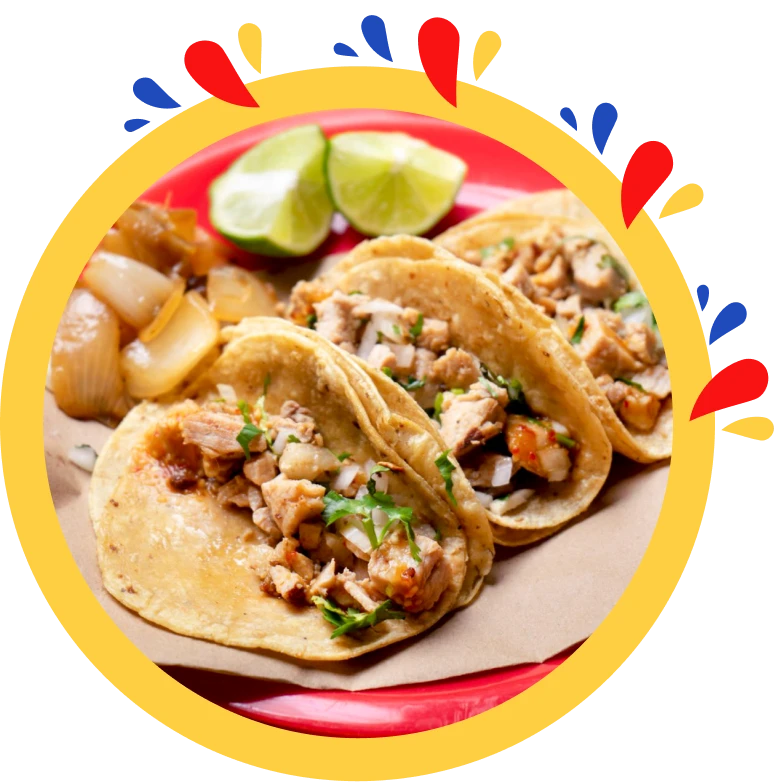
A tortilla is not a taco. It is what makes a taco possible.
That sounds obvious, but outside Mexico the two words are often blurred together. “Taco shells” get treated as the default, tortillas are reduced to packaging, and the filling gets all the attention.
Mexican taco culture flips that hierarchy. The tortilla is part of the flavor, structure and identity of the taco. If you want to understand tacos better, start there.
Tortilla: the foundation
A tortilla is a thin, round flatbread traditionally made from either maize or wheat flour, depending on the region and use.
Corn tortillas have ancient Mesoamerican roots. The maize is traditionally transformed through nixtamalization: the grain is cooked and rested in an alkaline solution, then washed and ground into masa. The process changes how the maize behaves, tastes and can be worked into tortillas.
UNESCO includes nixtamalization among the traditional techniques that form part of the broader cultural model of Mexican cuisine inscribed on its Intangible Cultural Heritage list in 2010. UNAM likewise describes nixtamalization as a millennia-old Mesoamerican technique central to turning maize into masa for tortillas and other foods.
Taco: what the tortilla becomes
A taco is the complete food: tortilla plus a filling or preparation, usually folded or held so it can be eaten by hand.
That filling can be almost anything that belongs in the logic of a taco. Mexico has tacos built around grilled meats, slow-cooked meats, stews, seafood, vegetables, offal and regional specialties that do not fit neatly into one international definition.
So the relationship is simple:
Tortilla = the base. Taco = the assembled bite.
A tortilla can exist without becoming a taco. A taco, in the traditional Mexican sense, needs a tortilla.
| Compare | Tortilla | Taco |
|---|---|---|
| What it is | A thin, round flatbread made from maize or wheat flour, depending on region and use. | The complete food: tortilla plus a filling or preparation. |
| Role | The base. | The assembled bite. |
| Can it stand alone? | Yes. A tortilla can exist without becoming a taco. | In the traditional Mexican sense, a taco needs a tortilla. |
Corn or flour? Both can be Mexican
One of the quickest ways to flatten Mexican food culture is to declare that only corn tortillas are “real.”
Corn is fundamental to Mexican cuisine, especially across central and southern regions, and it has the older Mesoamerican history. But wheat-flour tortillas also have a long Mexican history and are deeply established in northern Mexico and borderland food traditions.
The U.S. National Park Service, documenting foodways in the historic Pimeria Alta region, notes that wheat introduced during the Spanish colonial period became part of local food culture and that flour tortillas remain a staple in northern Mexico and southern Arizona. Smithsonian library records on tortilla history likewise point to the enormous wheat tortillas of northern Mexico as part of the tortilla story.
National Park Service - Tortillas de harina
Smithsonian Libraries - Tortillas: A Cultural History
The useful question is not “corn good, flour fake?” It is which tortilla makes sense for this taco, in this regional or culinary context?
Why the tortilla changes the entire taco
Imagine two tacos with exactly the same filling.
One tortilla is warm, flexible and aromatic. It bends without tearing and gives the filling enough structure without dominating it.
The other is dry, cold and too thick. It cracks, mutes the aroma and forces you to think about the wrapper instead of the taco.
Same filling. Completely different experience.
A good tortilla affects at least four things:
- Aroma: warm corn or wheat is part of the first smell of the taco.
- Texture: softness, chew and light char change every bite.
- Structure: the tortilla has to hold the filling without becoming cardboard.
- Balance: size and thickness determine the ratio between tortilla, filling and salsa.
This is why reducing the tortilla to a neutral plate misses half the craft.
A good tortilla changes aroma, texture, structure and balance before the filling gets any credit.
What about hard taco shells?
Hard U-shaped shells are strongly associated with U.S. fast-food taco culture. Fried tacos absolutely exist in Mexican cooking, but the pre-formed packaged shell is not the universal Mexican default.
Food historian Jeffrey M. Pilcher has documented how pre-fried shells helped make tacos easier to mass-produce and market in the United States in the twentieth century. That history is real; it is simply a different branch of taco culture from the fresh soft tortillas common in Mexican taquerias.
How does a tortilla become a great taco?
There is no universal formula, but there is a useful way to think about the build.
First comes the tortilla. Then the preparation: pastor, carnitas, barbacoa, vegetables, seafood or whatever style the taco is built around. Then salsa and finishing ingredients add acidity, heat, freshness or contrast.
The important word is balance. More filling is not automatically better. More salsa is not automatically better. A giant tortilla is not automatically better.
The taco works when all the parts arrive in the same bite.
Why we care about this at La Taqueria Chiquitita
The easiest version of Mexican food abroad is to focus on fillings because they photograph well and sound familiar on a menu. But taco culture asks you to notice the less glamorous infrastructure too: tortilla, salsa, temperature, timing and proportion.
That educational side of taco culture is part of what La Taquería Chiquitita wants to bring into Vienna. Not a lecture before dinner - nobody needs that - but enough knowledge that the food makes sense.
Take a look at the current menu, then try one small experiment the next time you eat a taco: take the first bite before adding anything else and notice the tortilla.
Once you do, it becomes very hard to treat it as packaging again.
Kurz erklärt: Taco oder Tortilla?
Was ist der Unterschied zwischen Taco und Tortilla?
Die Tortilla ist die Grundlage - ein dünnes Fladenbrot aus Mais oder Weizen. Der Taco ist das fertige Gericht: eine Tortilla mit einer Füllung oder Zubereitung, oft mit Salsa und weiteren Zutaten.
Welche Tortilla nimmt man für Tacos?
Das hängt vom Taco und von der Region ab. Maistortillas sind in großen Teilen Mexikos zentral. Weizentortillas haben ebenfalls eine lange Tradition, besonders im Norden Mexikos.
Sind harte Taco Shells dasselbe wie Tortillas?
Sie gehören zur weiteren Taco-Geschichte, sind aber nicht der allgemeine Standard einer mexikanischen Taquería. Viele Tacos werden mit frischen, weichen Tortillas serviert.
Warum ist Nixtamalisierung wichtig?
Bei der Nixtamalisierung wird Mais mit Wasser und einer alkalischen Substanz wie Kalk behandelt. Dadurch entsteht die Grundlage für Masa und viele traditionelle Maistortillas; zugleich verändern sich Geschmack, Verarbeitung und Nährstoffverfügbarkeit des Maises.


